Clinical Hypnotherapy
Working With Focused Attention, Imagery and Automatic Patterns
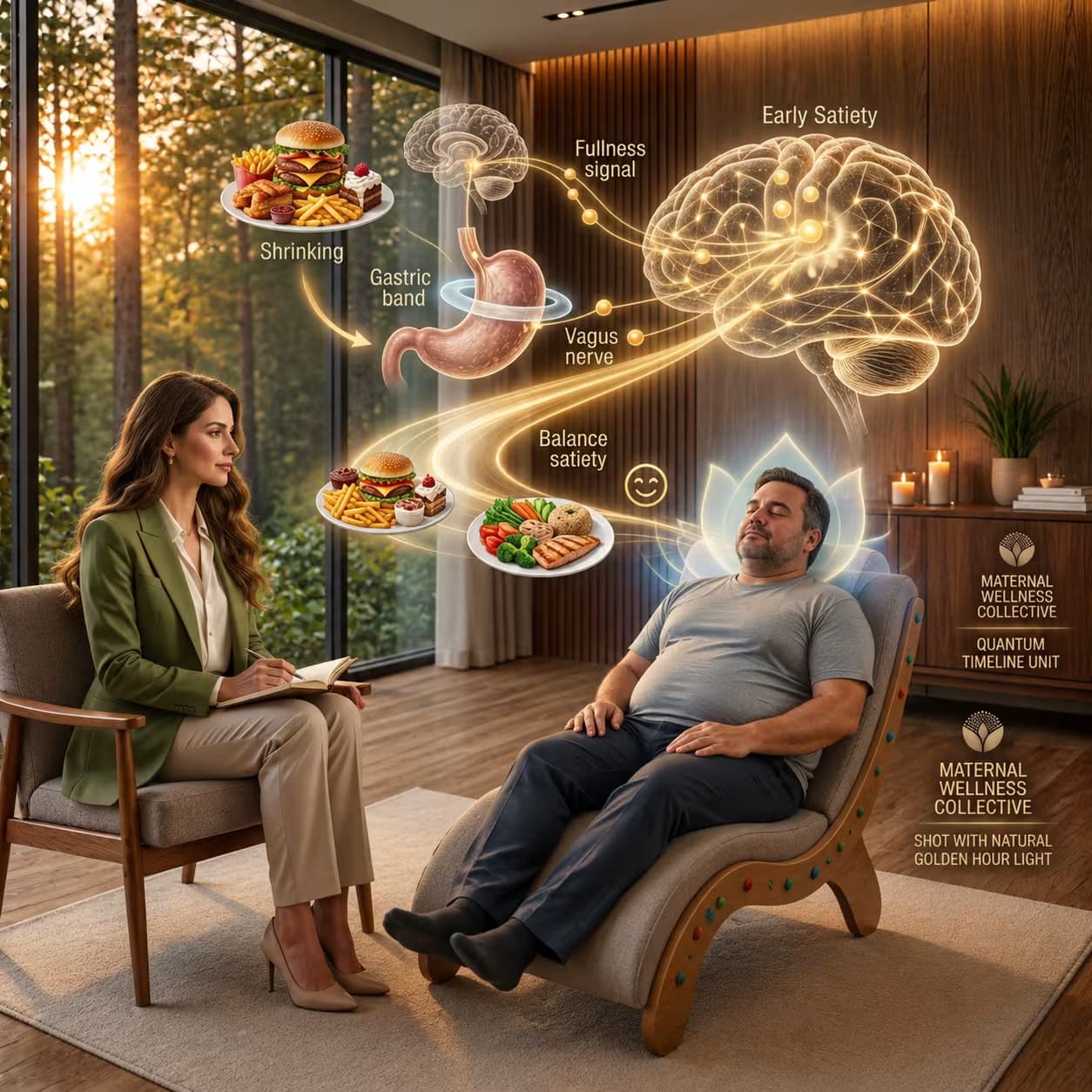
Clinical Hypnotherapy is one of the central approaches within my integrative mental wellness practice, and it is supported by a growing body of scientific research.
Many people associate hypnosis with sleep, loss of control or stage performances. Clinical hypnosis is very different.
During hypnosis, attention becomes more focused and absorbed. Outside distractions can feel less important. Imagery may become more vivid, and therapeutic suggestions, reflection and mental rehearsal can be explored with greater concentration.
You remain aware and actively involved throughout the process.
You can hear what is being said. You can think critically. You can communicate. You can accept or reject any suggestion. You can move. And you can pause or stop the process at any time.
Hypnosis does not require unconsciousness, loss of control or a passive state in which you simply obey suggestions.
Modern cognitive neuroscience and functional neuroimaging show that hypnosis is associated with measurable changes in attention, self-referential processing and functional connectivity between large-scale brain networks. For example, a well-known fMRI study reported reduced dorsal anterior cingulate activity, increased connectivity between dorsolateral prefrontal and insular regions, and reduced connectivity between executive-control and default-mode regions during hypnosis in highly hypnotizable participants. These findings help explain focused attention and altered processing during hypnosis, but they should not be interpreted as a single universal brain signature or as proof that hypnosis directly controls a specific organ or disease process.
These findings show that hypnosis is a measurable cognitive phenomenon. In practice, however, the most useful question is not which brain region changes. It is how focused attention, imagery, expectation and rehearsal can help a person work with patterns that have become learned and automatic.
A person may consciously know that flying is statistically safe and still experience intense physiological fear.
Someone may genuinely want to stop smoking yet automatically reach for a cigarette during stress.
Another person may know that they are capable of performing well and still freeze when they stand in front of an audience.
Understanding a problem intellectually does not always change an automatic response that has been learned over time.
Clinical Hypnotherapy brings together focused attention, therapeutic imagery, expectation, emotional exploration and mental rehearsal. This gives the support seeker a structured way to practise another response.
The aim is not to erase the past or change someone's personality.
The aim is to recognise what has become automatic, then use focused attention and therapeutic rehearsal to strengthen cognitive, emotional and behavioural responses that better support the life the person wants to live.
Specialised Wellness Support Pathways
A Personalised Integrative Approach
Anxiety may disturb sleep. Poor sleep may make emotional regulation harder. Overthinking may increase physical tension. Avoidance may provide temporary relief but gradually reduce confidence. A difficult relationship may activate old patterns that then affect work, appetite, concentration or the ability to switch off.
For this reason, I do not work from a rigid protocol in which every support seeker receives the same sequence of techniques.
I begin by understanding the pattern.
What is happening now?
What keeps repeating?
What happens in the body?
What happens in the mind?
What tends to trigger the response?
What provides temporary relief but keeps the cycle going?
What is happening with sleep, routines, relationships and everyday functioning?
And what does the support seeker actually want to become different?
From there, I select the approaches that make sense for that person.
Depending on the situation, a Transformational Session may bring together Clinical Hypnotherapy, neuro-somatic regulation, focused attention, guided imagery, emotional regulation, behavioural change, mind-body practices, lifestyle awareness, reflective work and my Pro Consciousness approach.
The purpose of integrative work is not to use as many techniques as possible.
It is to use the right combination, at the right time, for the person in front of me.
How I Choose an Approach
I do not begin a consultation with a predetermined technique.
I do not assume that everyone with anxiety needs hypnosis.
Or that everyone who feels overwhelmed needs breathing work.
Or that every repeated pattern requires regression.
I begin with the support seeker.
What is happening?
What keeps repeating?
What happens before it?
What happens in the body?
What happens in the mind?
What does the person do next?
What gives temporary relief?
What makes the pattern stronger?
What already helps?
And what would meaningful change actually look like for this person?
Only then do I decide which approaches belong in the work.
One support seeker may need more neuro-somatic regulation. Another may respond strongly to Clinical Hypnotherapy. Someone else may need behavioural change, sleep support and reflective work. Another person may need a combination. The framework adapts to the person rather than expecting the person to adapt to the framework.The person comes first. The modality comes second.That is the principle behind my integrative approach.
A Research-Informed Integrative Approach
Research matters to me. But research is most useful when it helps us understand the person rather than reducing the person to one mechanism.
Clinical Hypnotherapy has its own growing evidence base.
Mindfulness and focused attention have substantial research behind them.
Behavioural learning helps explain habits and avoidance.
Interoception helps us understand the relationship between bodily sensations and emotion.
Mental imagery is well established in performance and rehearsal research.
Neuroplasticity explains why repeated learning matters.
Sleep and lifestyle research reminds us that mental wellbeing does not exist separately from everyday life.
Meaning and values research shows that wellbeing involves more than reducing symptoms.
These areas do not compete with one another. They help explain different parts of the same human experience. That is why I work integratively.
I use research to inform the approach, and the individual to determine how that approach is used.
Professional and Educational Scope
This page explains Clinical Hypnotherapy and related integrative approaches for educational, holistic and complementary mental wellness purposes.
References to psychiatric diagnoses, medical conditions and physical symptoms describe areas in which hypnosis has been studied or may be used as adjunctive support. They do not mean that this practice diagnoses, medically treats, cures or manages those conditions, and they should not be interpreted as a representation that Clinical Hypnotherapy is equivalent to medical, psychiatric, psychological, dental, obstetric, neurological, oncological or other specialist care.
Where a medical or psychiatric condition is present, the support seeker should remain under the care of an appropriately qualified healthcare professional as clinically indicated. Complementary work is considered individually and is intended to support wellbeing, coping, behaviour, attention, emotional regulation and related goals alongside, not in place of, established care.
Clinical Hypnotherapy does not require unconsciousness, amnesia or loss of personal control. Exploratory regression work uses symbolic and imaginative processes and is not intended to establish historical facts. Past Life Regression is framed as symbolic, spiritual or transpersonal exploration according to the support seeker’s own framework. Future Life Progression is prospective imagery, not prediction. Any references to “quantum” processes are conceptual or poetic metaphors for possibility, not claims of a scientifically established quantum treatment mechanism.
Nothing on this website is medical advice, a diagnosis, a treatment recommendation for a medical or psychiatric condition, or a reason to start, stop or change prescribed medication or established care. New, severe, persistent or unexplained symptoms require appropriate professional assessment. This practice does not provide emergency medical, psychiatric or crisis intervention. Individual responses to hypnosis vary, and no specific outcome is guaranteed.